
Joyagoo Shipping Calculator: Inputs, Units and a Worked Example
A Joyagoo shipping calculator needs a destination, parcel contents and realistic packing measurements. Use it to compare a defined package on eligible routes. Do not treat the result as a promise about a package that has not yet been packed.
This walkthrough explains the inputs and arithmetic. For the cost components and route-selection questions around the calculation, read the shipping guide.
Prepare the inputs first
Record the destination country and the postal area requested by the estimator, the item types, estimated packed weight and all three outer dimensions. Keep units visible. A measurement in centimetres cannot be substituted into a formula expecting inches without conversion.
Choose the correct contents before comparing prices. Batteries, liquids or other restricted items can affect which services appear. Do not change the description merely to make a cheaper route available.
Calculate volumetric weight
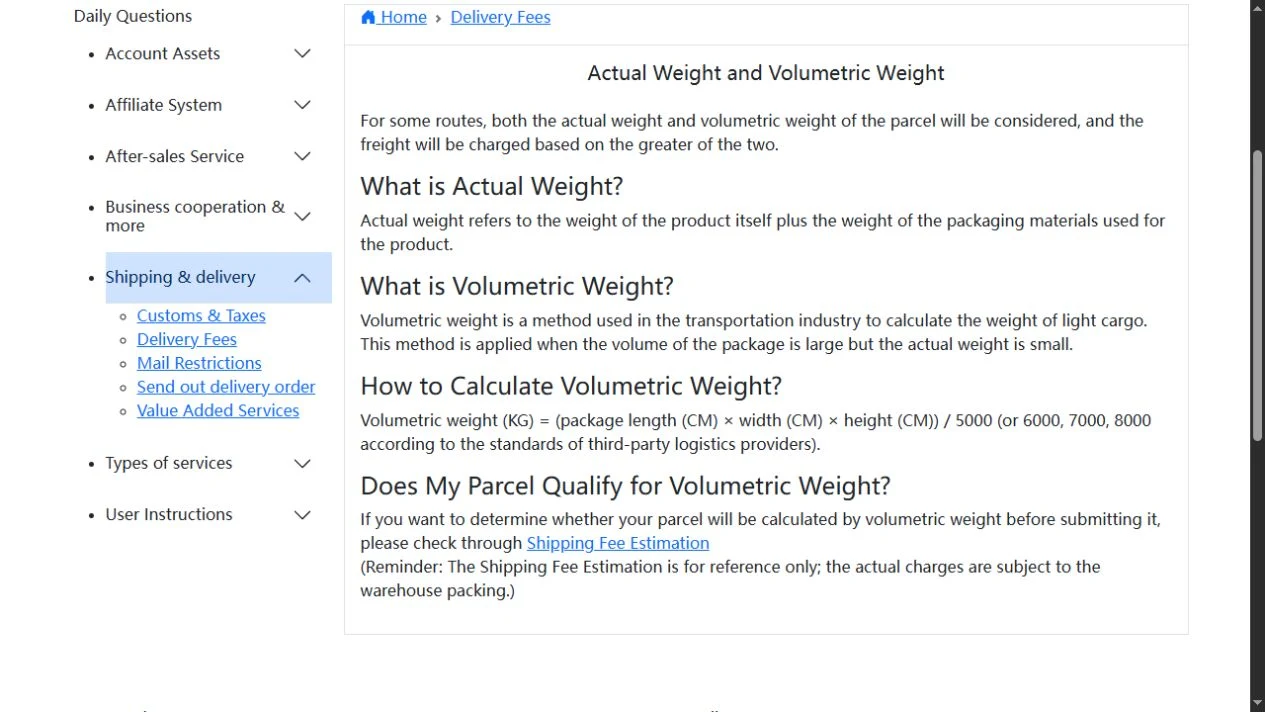
The basic calculation is length × width × height ÷ the selected route's divisor. With dimensions in centimetres and the corresponding divisor, the result is a volumetric weight in kilograms.
Use this example only to understand the calculation:
| Input | Example value |
|---|---|
| Outer dimensions | 40 × 30 × 20 cm |
| Actual packed weight | 3.2 kg |
| Assumed route divisor | 6,000 |
| Volumetric calculation | 40 × 30 × 20 ÷ 6,000 = 4.0 kg |
| Greater of the two weights | 4.0 kg |
These are illustrative inputs, not a measured Joyagoo shipment or a quoted route. If a route uses the greater weight, the starting billing basis in this example is 4.0 kg before any minimum or rounding rule. A different divisor produces a different result.
Test a packing change
Suppose the outer height in the same example could be reduced from 20 cm to 15 cm while preserving adequate protection. The volume calculation becomes 40 × 30 × 15 ÷ 6,000 = 3.0 kg. If the actual weight remained 3.2 kg, that scale weight would now be greater.
This comparison tells you why dimensions matter. It does not prove that the warehouse can achieve those measurements, that the item remains protected, or that the final price falls by a particular amount. Recalculate with the actual packed figures when available.
Compare one parcel with two
For a split shipment, calculate each parcel independently. Each may have its own minimum charge and packing weight. Add the two complete quotes before comparing them with the consolidated quote; dividing one estimate in half skips those differences.
Keep an oversized item visible in your plan. It may set the box dimensions even when most of the remaining items are compact. The product-selection guide helps you record dimensions and options while choosing items.
Read the result before paying
Check the selected route, contents, weight basis, rounding and included services. Review whether an applied coupon changes freight or another charge. Compare the amount payable after the conditions are applied, not a percentage in isolation.
Save the calculation assumptions with your own order notes. If a later packed quote differs, you can compare the inputs and identify the change rather than wondering whether the calculator used the same parcel.
Open jackets to compare a bulky clothing category. Use garment measurements for fit, and the packed box measurements for freight; they serve different purposes.
Why does the result change after warehouse packing?
The final dimensions, packaging and scale weight may differ from your preliminary inputs. Route availability and the current quote also need checking at the time of submission.
Should I round the weight myself?
Apply the exact route's rule when it is known. Otherwise retain the calculated value in your notes and check how the estimator applies its charging increment.
Does this calculate customs charges?
The weight calculation does not. Check which amounts the selected service includes and the current import requirements for the destination; do not assume that a freight estimate covers every possible charge.